By: Makeda Marshall-NeSmith
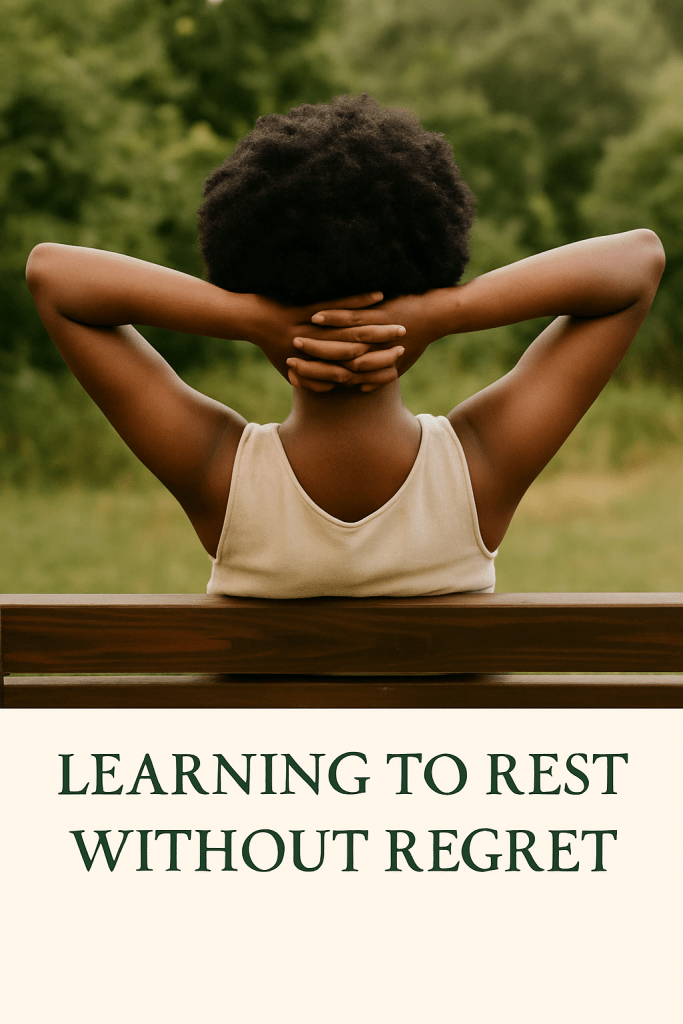
We’ve all heard it before: rest can save your life. If you want to explore that deeply, I’d point you to two powerful pieces from voices I admire: Why Is Exhaustion So Normalized for Black Women? from Allure, and Yes, Even Social Activists Need Rest Too from Verywell Mind. Both speak to the radical, life-saving importance of rest. But this isn’t another article about why rest matters. This is about me — right now — in a moment that feels like freefall.
This year has been relentless. 2025 has carried one unprecedented event after another, each one chipping away at our sense of stability and, at times, our sense of each other. I’ve felt pieces of myself stretched thin, as if the constant pace of the world keeps pulling parts of me away. Pressing pause, even briefly, isn’t about reinventing everything overnight; it’s about creating just enough space to sort through the noise, to ask better questions, and to remember who I am.
When I ask myself about my purpose work, my mind circles back through the path that brought me here. As a teenager, I thought I would be a doctor. But during my freshman year of college, while studying international relations and African American history, I realized there were other ways to help people heal. It was in those classrooms that I first started questioning food systems, digging into ideas of food justice, and wondering how food shapes our daily lives.
At the same time, my fascination with womanhood and birth deepened into a commitment to birthing justice. Together, these passions began to push me toward a bigger vision. By the time I entered graduate school, I already knew I wanted to study urban planning. I can still picture myself during my very first week, sitting with one trusted friend, describing my dream of creating a community centered on farming and strong, shared values — a place where neighbors supported each other, where families had what they needed to thrive, where food and birth and justice were not separate but woven together. That vision is what ultimately shaped my career as a planner.
And yet, even with such clarity about what I care about, life often pulls me away from it. My calendar fills with responsibilities. Reflection slips away. Rest feels like a luxury. Even something as simple as a bath — not just hygiene but restoration, a moment where steam and stillness wrap around me like medicine — too often feels impossible. I tell myself I don’t have the time. Undoing that mindset is hard. But I’m learning that rest isn’t indulgence. Rest is clarity. Rest is remembering myself.
The truth is, rest isn’t just about individuals. Chronic stress strains our relationships and erodes community. Research shows that strong social support doesn’t just soothe — it buffers stress and improves mental health, reducing anxiety and depression. And yet, studies also show we are living through a “friendship recession,” where the number of close connections is shrinking. This makes rest — slowing down, reconnecting, being present with ourselves and with each other — even more urgent. Because when we rest, we create the conditions for community to hold us.
Moving forward, I want to be more intentional about weaving rest into my life. That means allowing myself micro-pauses between meetings, even just five minutes to breathe or a short soak in the tub without guilt. It means holding firmer boundaries around my time and protecting one or two evenings a week for nothing but true rest. And it means intentionally threading joy into my routines — cooking a nourishing meal, journaling for a few minutes, or stepping outside with my kids. These aren’t luxuries. They are practices I plan to carry forward so that even the busiest seasons leave me more grounded.
Fall always feels like a reset to me, one of those “new years” we mark alongside birthdays, anniversaries, and the turning of the calendar. As the leaves fall and the air shifts, I’m reminded that nature shows us how to slow down, how to prepare for the stillness of winter. Vacation gives me a taste of it, but the real practice is learning how to integrate rest — without regret — into daily life.
Rest is not a pause from living. Rest is part of living. It is resistance to a culture that glorifies exhaustion, and it is renewal in the midst of chaos. It is how I reclaim the pieces of myself that stress tries to take away. And when I rest, I come back to myself. That, I’m realizing, is the most powerful reset of all.
 Sankofa Community Welness